Trevor Lunsford is a finance and M&A professional whose career has focused on software businesses, with particular exposure to vertical and enterprise-focused technology companies. Beginning his career as an analyst and advancing through roles including Vice President and Director, Trevor Lunsford has worked on mergers, acquisitions, and capital raises for a wide range of software organizations. His transaction experience spans more than $5 billion in closed deal value and includes work with established SaaS platforms and the investors that support them. Through this work, he has developed a practical understanding of how subscription-based software models operate, scale, and create value for business customers. His academic background in finance, combined with hands-on advisory experience, provides a grounded perspective on why B2B SaaS has become a foundational component of modern business infrastructure and how companies evaluate, adopt, and invest in these tools.
What is B2B SaaS? The Engine of Modern Business
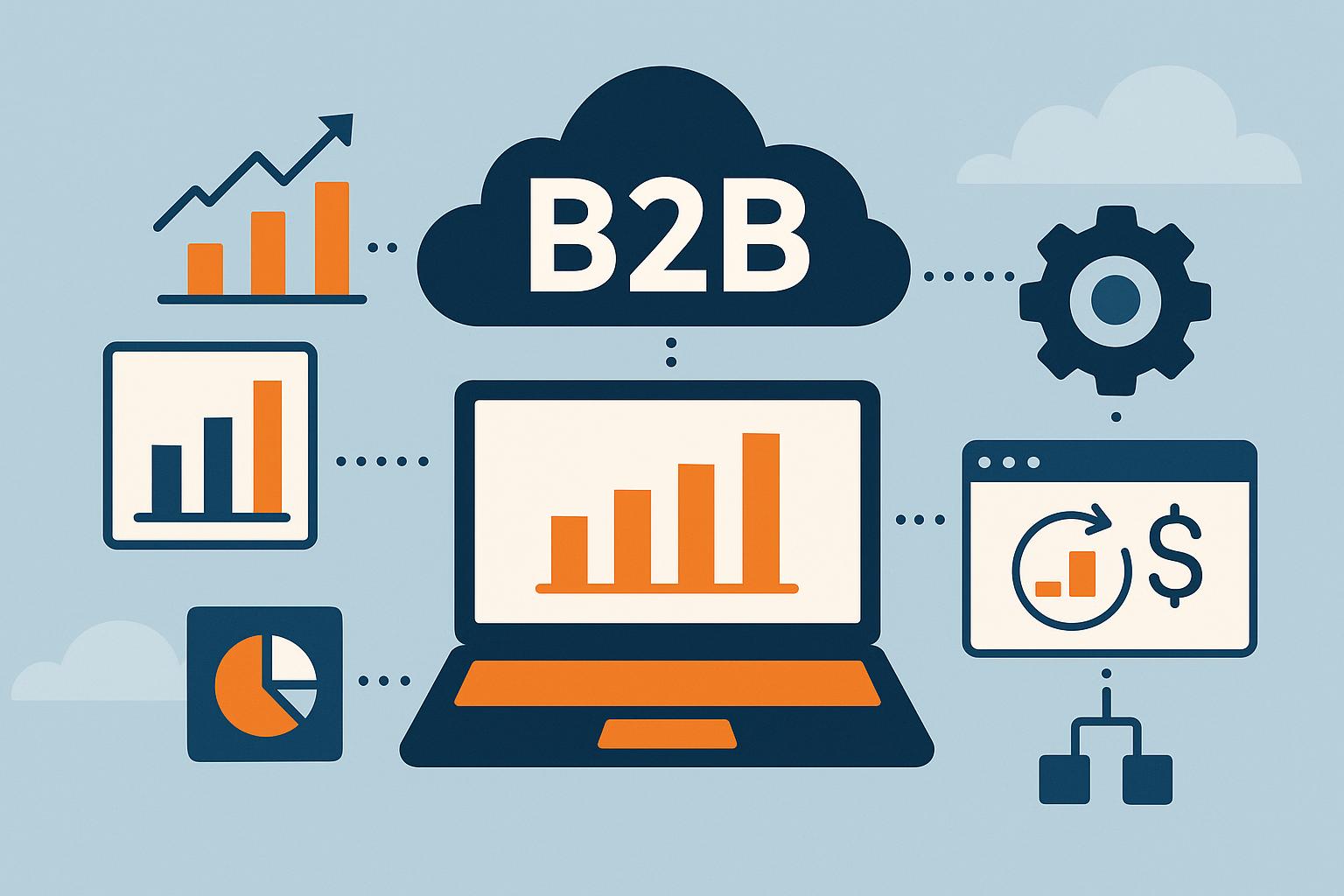
At its core, B2B SaaS (Business-to-Business Software-as-a-Service) is simply software that businesses subscribe to over the internet to help them run more smoothly.
Think of it as the difference between buying a DVD and subscribing to Netflix—but for companies. Instead of buying a massive, expensive software package that you have to install on every computer in your office (the “DVD” model), you pay a monthly or annual fee to access powerful tools through your web browser (the “streaming” model).
Because it is Business-to-Business, the customer isn’t an individual browsing the app store; it is an organization – like a hospital needing to track patient records, or a marketing agency needing to schedule social media posts.
The Difference: Buying for Yourself vs. Buying for a Team:
It is easy to confuse B2B SaaS with the apps we use personally (B2C SaaS, like Spotify or Dropbox), but the difference lies in the stakes and the complexity.
• B2C (Consumer): This is low-friction. You see an app, you like it, you pay $10/month, and you start using it in five minutes. It’s designed for broad appeal and simplicity.
• B2B (Business): This is high-stakes. The software has to handle complex workflows, sensitive data, and hundreds of users. The “sales cycle” isn’t an impulse buy; it involves demos, negotiations, and proving to a CFO that the software will actually make the company money (ROI).
Why Companies Are Moving to the Cloud:
The reason B2B SaaS has taken over the business world is that it solves the headaches of the old “on-premise” software era.
• Access Anywhere: Because it lives in the cloud, your team can work from the office, their home, or a coffee shop.
• Scalability: If your company grows from 10 employees to 100 overnight, you don’t need to buy new servers. You just upgrade your subscription plan.
• Collaboration: These tools are built for teamwork. Features like real-time editing and shared workspaces mean people can work together instantly, rather than emailing files back and forth.
• We Handle the Maintenance: In the old days, you needed an IT guy to install updates. In SaaS, the vendor handles all the security patches, updates, and maintenance in the background. You just log in and work.
The Ecosystem: Tools for Every Job:
Today, there is a B2B SaaS tool for almost every specific problem a company faces.
• The Hub (CRM): Tools like Salesforce act as the brain of the sales department, tracking every interaction with a customer.
• The Nervous System (ERP): Systems like Oracle or SAP connect finance, HR, and supply chain data so the whole company stays in sync.
• The Conversation (Collaboration): Apps like Slack and Asana replaced the endless email chain, helping teams organize tasks and chat in real-time.
• The Wallet (Finance): Tools like Xero or QuickBooks make payroll and invoicing painless.
The Challenges of the Industry:
While the model is powerful, it isn’t easy for the companies selling the software.
Because these are big purchases, the sales cycle is long. You aren’t just convincing one person; you have to convince a manager, their boss, and the IT security team. This makes acquiring new customers expensive.
Furthermore, the business lives and dies by retention. Since customers pay a subscription, they can leave (or “churn”) if they aren’t happy. This puts pressure on SaaS companies to offer amazing customer support and constantly release new, innovative features. If the software is too hard to learn or doesn’t play nice with the systems the client already has, the client will walk away.
The Recipe for Success:
For a B2B SaaS company to win, they need “Product-Market Fit”—building the exact solution a specific group of people is desperate for.
The best companies don’t just sell software; they guide the customer. They use content and education to find leads, and then use a disciplined sales process to close the deal. But the work doesn’t stop at the sale. The goal is to turn a new user into a long-term partner who is so happy with the service that they tell their peers. In the subscription economy, relationships are everything.
About Trevor Lunsford
Trevor Lunsford is a Director with professional experience in mergers and acquisitions focused on software and SaaS businesses. He has advised on more than $5 billion in transaction value, supporting both operating companies and institutional investors across platform investments and add-on acquisitions. His background includes roles in deal execution, team leadership, and mandate sourcing. Trevor holds both a bachelor’s degree and a master’s degree in finance from Georgia State University.