
Andrew Sorial is a board-certified psychiatrist who has built his career around delivering personalized care to patients facing depression, anxiety, mood disorders, and post-traumatic stress. He earned his medical degree from Ross University School of Medicine in 2010 after undergraduate and graduate studies in biomedical and biological sciences at Florida Atlantic University, where he was a Presidential Scholar. He completed his psychiatric residency at Larkin Community Hospital in Miami, later chairing its Psychiatry Didactics Committee, and practiced with Boca Raton Psychiatry from 2019 to 2026, collaborating with therapists, nurses, and social workers on holistic treatment plans. Earlier work with veterans at the Miami VA Healthcare System helped shape his passion for psychiatry. Board certified by the American Board of Psychiatry and Neurology, he is a fellow of both the American Psychiatric Association and the Florida Psychiatric Society, giving him firsthand insight into the psychiatric disorders discussed below.
Mental health issues are very common in the United States. According to the National Alliance on Mental Illness (NAMI), more than 20 percent of American adults live with at least one mental health condition, and in excess of 5 percent of US adults have a serious mental health episode every 12 months. Mental health issues are also common among younger Americans, with nearly 15 percent of people between the ages of six and 17 experiencing one or more mental health disorders annually.
According to NAMI data, anxiety disorders represent the most common mental health condition in the US, affecting around19 percent of adults. The term “anxiety disorder” refers to a group of mental health conditions characterized by pervasive feelings of fear and nervousness. Some conditions are mild and intermittent, while severe anxiety disorders make it extremely difficult for people to complete daily activities.
Specific anxiety disorders range from generalized anxiety disorder to social anxiety disorder, as well as specific phobias. Fortunately, health professionals can treat anxiety disorders using psychotherapeutic techniques and various medications, including antidepressants and beta-blockers.
Major depressive disorder ranks second in terms of prevalence among US adults at 15.5 percent. Also referred to as clinical depression, major depressive disorder is a health condition that causes people to experience a consistently low mood and to lose interest in previously enjoyable activities.
Under the criteria established by the Diagnostic and Statistical Manual of Mental Disorders, a person must experience a minimum of five major depression symptoms almost every day for at least two weeks before a care provider can make a major depressive disorder diagnosis. Individuals may experience emotional, behavioral, physical, or cognitive depression symptoms. Like anxiety, depression often responds well to medical and psychotherapeutic treatment.
Adults and young people can also take several steps to minimize the risk of depression. In addition to avoiding addictive substances, individuals should establish consistent sleep patterns and exercise routines, refine healthy emotional coping strategies, and maintain regular contact with family, friends, and others.
More than 8 percent of Americans live with a mental health disorder and a substance use disorder. The American Psychiatric Association describes substance use disorders as a medical condition defined by excessive use of drugs or alcohol. The nature of dependence and specific symptoms can range considerably depending on the substance involved.
Substance use can lead to many complications for adults who are also experiencing symptoms of a mental health disorder; in addition to affecting basic cognitive processes, substance use can alter healthy brain chemistry, disrupt neural circuits, and trigger episodes of psychosis.
Finally, about 4.1 percent of adults in America experience symptoms of post-traumatic stress disorder (PTSD). PTSD develops after a person experiences or witnesses an intense, potentially life-threatening event, such as a car accident, military service, or another type of physical violence.
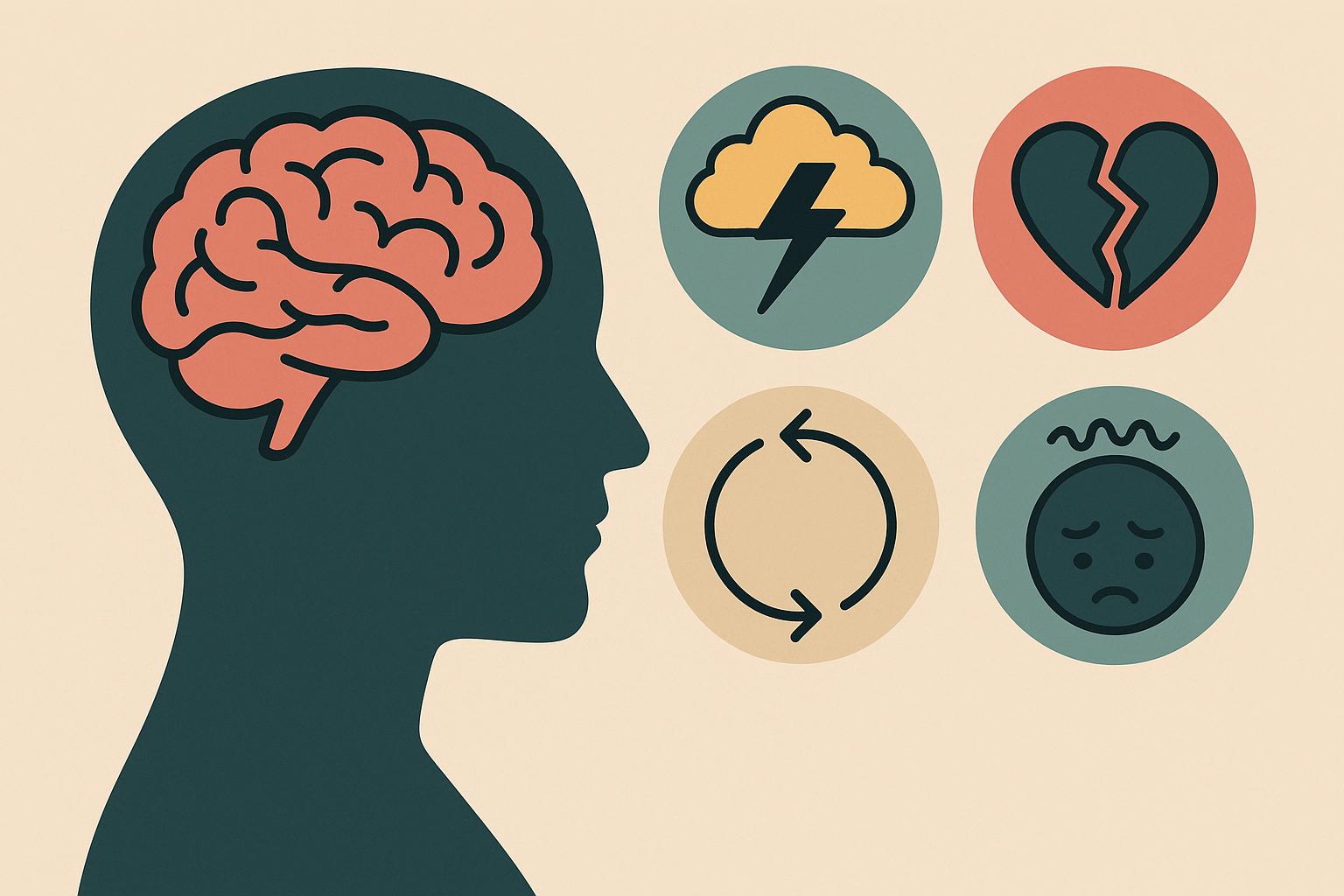
These and other events essentially cause the brain to get caught in a loop, making those affected relive the mental and physical symptoms of the event sporadically, or in response to certain triggers. Talk therapy and antidepressants are two of the most common approaches to treatment.
These are only a few of the most common psychiatric issues affecting US adults. Bipolar disorder, obsessive-compulsive disorder, borderline personality disorder, and several schizophrenia spectrum disorders are among the other prominent mental health disorders.
About Andrew Sorial
Dr. Andrew Sorial is a board-certified psychiatrist who most recently practiced with Boca Raton Psychiatry in Florida, focusing on psychopharmacology and personalized treatment planning for patients with depression, anxiety, mood disorders, and post-traumatic stress. He earned his medical degree from Ross University School of Medicine and completed his psychiatric residency at Larkin Community Hospital in Miami, where he later chaired the Psychiatry Didactics Committee. He is board certified by the American Board of Psychiatry and Neurology and is a fellow of the American Psychiatric Association and the Florida Psychiatric Society.