
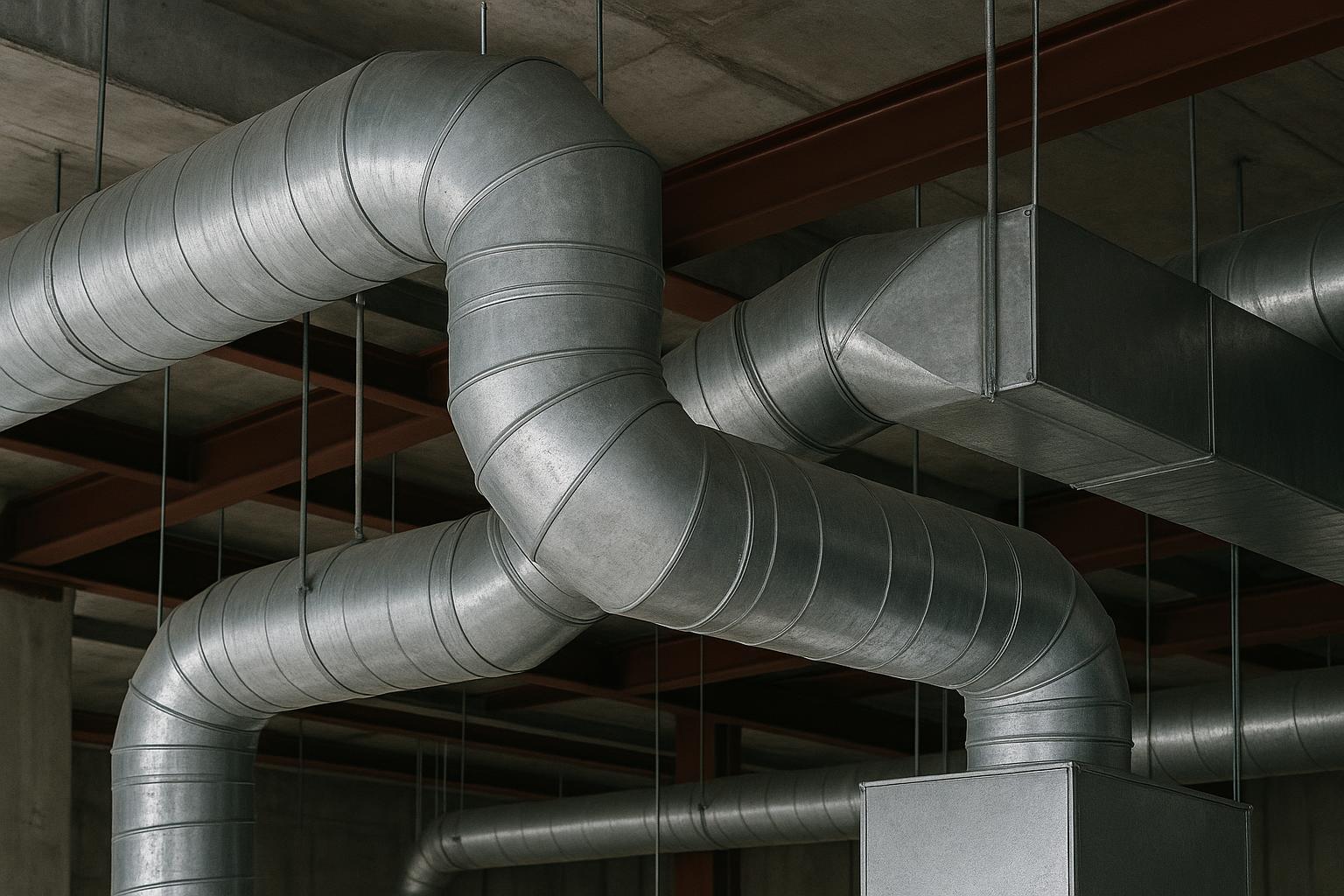
Vamco Sheet Metal Inc is a Cold Spring, New York-based company that has provided commercial ductwork fabrication and installation services throughout the Tri-State Area for more than four decades. Serving clients across New York, New Jersey, and Connecticut, the company manufactures a range of ductwork products, including galvanized, aluminum, stainless steel, welded carbon steel, and specialty systems. Vamco Sheet Metal Inc also supports projects through services such as 3D building information modeling (BIM) renderings and advanced fabrication processes that incorporate technology and automation. Working on commercial construction projects for schools, businesses, and federal health care facilities has provided experience with a wide variety of HVAC system requirements. This background offers useful context for understanding why some commercial ductwork jobs present greater challenges than others during planning, fabrication, and installation.
Understanding Why Some Commercial Ductwork Jobs Are Harder to Build Than Others
Two ductwork jobs can look similar and still demand very different levels of effort once planning and installation begin. Here, “commercial ductwork jobs” means projects that involve fabricating and installing HVAC duct systems in nonresidential buildings such as offices, schools, hospitals, and public facilities. The work gets harder when the building’s use, the available space, and the job conditions leave less room for simple decisions and smooth execution.
An office fit-out usually does not create the same demands as a hospital area, a laboratory, or a space with specialized exhaust requirements. A basic office supply-air run does not require the same planning as duct serving a medical or controlled environment where airflow, pressure relationships, and exhaust rules carry more weight.
Another common pressure starts with space. Duct often has to share ceiling space and shafts with piping, conduit, cable tray, structure, and equipment. When those systems crowd the same zone, teams have a harder time finalizing routes, connection points, and hanger locations without creating conflicts.
That is where early coordination matters most. Before fabrication starts, the design team, detailers, and trade partners need to compare layouts closely enough to settle routing decisions while they still have room to adjust them. If that review comes too late, the shop can begin work from drawings that already contain avoidable conflicts.
From there, fabrication difficulty can rise even after teams largely settle the layout. Some jobs depend on custom pieces from the beginning, including irregular dimensions, unusual transitions, specialized exhaust configurations, or duct materials beyond standard galvanized construction. In that setting, the shop cannot rely as heavily on routine output because the job requires more project-specific review before production starts.
Difficulty rises again when changes arrive after planning or release begins. If dimensions shift or related trades make late routing, equipment, or clearance decisions, detailers, shop staff, and field leads have to confirm the latest drawing set and identify which pieces now need revision. That kind of change-tracking problem can force rework even after the original fabrication path looked settled.
Even then, correct shop work does not guarantee an easy installation. Crews can still struggle to place some sections when lift access is limited, staging space is poor, overhead hazards are present, or other trades are moving through the same area. A duct section may fit the drawing perfectly and still take extra labor because the site does not give the crew a clean way to set it.
A job may not look especially difficult in physical terms, yet it becomes harder when crews have to work in a tighter sequence, wait for access windows, or adjust installation timing around surrounding work. That kind of pressure hurts labor efficiency even when the duct itself requires no unusual fabrication.
The toughest projects usually combine several of these demands in one place. A team may be working in a specialized building, within a crowded layout, with custom pieces, active revisions, and difficult installation access all at once. Under those conditions, one disruption can easily affect fabrication, delivery, or installation.
On a difficult ductwork job, the real advantage comes from spotting the source of trouble early enough to respond in the right way. A layout problem calls for coordination, a revision problem calls for drawing control, and an access problem calls for a better installation plan. Teams that make those distinctions early usually protect labor, reduce avoidable disruption, and keep the work moving more steadily.
About Vamco Sheet Metal Inc
Vamco Sheet Metal Inc is a commercial ductwork fabrication and installation company based in Cold Spring, New York. Established in 1974, the company serves clients throughout New York, New Jersey, and Connecticut, manufacturing standard and specialty ductwork systems for commercial construction projects. A member of SMACNA, the Northeastern Subcontractors Association, Inc., and Sheet Metal Workers Local Union 38, Vamco emphasizes safety, precision fabrication, and compliance with industry standards while supporting projects through advanced modeling and fabrication technologies.